
US President Donald Trump threatened to bomb Iran if a deal is not reached before the ceasefire ends, while Pakistan urged both sides to extend the truce and pursue diplomacy.

Iran blames the US for 'maximalism' and 'shifting goalposts' leading to the collapse of the Islamabad talks.

US President Donald Trump announced a finalised peace deal between the US and Iran, set for signing on June 19 in Switzerland, with key figures like J D Vance, Steve Witkoff, and Jared Kushner from the US side, and Abbas Araghchi and Mohammad Bagher Ghalibaf representing Iran, alongside Pakistani mediators Field Marshal Asim Munir, Shehbaz Sharif, Ishaq Dar, and Mohsin Naqvi, playing crucial roles in the diplomatic breakthrough.

Iran has confirmed its participation in peace talks hosted by Pakistan, aimed at resolving the conflict with the US and Israel, despite concerns over ceasefire violations.

Ebrahim Azizi, head of Iran's National Security Committee, stated that diplomatic talks with the US are governed by national interest and security, viewing negotiations as an extension of military efforts.

US President Donald Trump claimed on Tuesday that Tehran has consented to long-term, comprehensive monitoring of its nuclear infrastructure. Concurrently, Washington will ease shipping constraints in the Strait of Hormuz and release bound financial concessions, subject to stringent American oversight.

US Secretary of State Marco Rubio said that discussions aimed at halting the conflict with Iran have shown "some slight progress," while simultaneously echoing Washington's dissatisfaction with its NATO allies.

Ebrahim Azizi, Head of the Iranian Parliament's National Security Committee, warned the US against interfering with the Strait of Hormuz, asserting Iran's sovereignty after former President Donald Trump threatened to 'take over' the strategic waterway. Despite the heated rhetoric, Iran and the US have established a direct communication line to prevent incidents during a 60-day negotiation period.

Talks between Iran and the US in Pakistan concluded without a deal due to disagreements over key issues, including Iran's nuclear programme and sanctions, despite efforts to find common ground.

US President Donald Trump has shared an article suggesting that the option of enforcing a naval blockade was available in the context of Iran, as peace talks ended in a stalemate in Islamabad after differences of opinion arose between the two parties on the Strait of Hormuz and Iran's nuclear capacities.

Pakistan Prime Minister Shehbaz Sharif on Thursday signed the historic peace deal between the United States and Iran as a guarantor; the agreement will see the immediate reopening of the Strait of Hormuz and the lifting of the US naval blockade.

The Iranian Foreign Ministry has stated that Tehran currently has no plans for a subsequent round of negotiations with the United States, according to the state media Tasnim news agency. This announcement comes as international mediators had hoped for a follow-up to the Islamabad talks before the looming ceasefire deadline.

Iranian Foreign Minister Seyed Abbas Araghchi announced the official end of the war and warned that any Israeli attack on Lebanon would violate an agreement between Iran and the United States. He also stated that negotiations on nuclear issues and sanctions lifting would begin on Saturday, led by Iran's Parliamentary Speaker M B Ghalibaf and US Vice President J D Vance.

The statement comes even as Tehran links the issue to ongoing efforts to bring a complete end to hostilities in West Asia involving the United States and Israel.

Iranian President Masoud Pezeshkian has confirmed Tehran's participation in Pakistan-facilitated peace talks with the US in Islamabad, according to Prime Minister Shehbaz Sharif. This development follows a conditional ceasefire agreement and aims to address regional tensions.

US Central Command (CENTCOM) forces conducted additional strikes against multiple targets in Iran, on Saturday (local time), at the commander in chief, US President Donald Trump's direction.

Ahead of the expiry on Tuesday of the two-week ceasefire declared by US President Donald Trump in the conflict with Iran, US media outlets reported on Sunday that negotiators Steve Witkoff, special envoy for peace missions and Jared Kushner will head to Islamabad for talks with Iran.

Speaking to reporters aboard Air Force One, Trump said the US prefers a negotiated settlement and expects cooperation from Iran on securing nuclear-related materials.

Pakistan's Interior Minister Mohsin Naqvi visited Tehran for the third time recently to mediate peace amidst rising tensions between the US and Iran. Pakistan is actively leading diplomatic efforts to de-escalate the conflict in West Asia, which has impacted global energy markets and trade.

Iran's foreign ministry spokesperson Esmaeil Baqaei on Sunday said that the recent meeting with US officials was the longest round of negotiations they have had in the past year.

Iran has submitted its latest proposal aimed at advancing negotiations to end the ongoing West Asia conflict with the US, days after the Islamic Republic submitted a fresh proposal through regional intermediaries to cease its military operations in the Strait of Hormuz, which is likely to get rejected by Washington.

The Iranian football team is facing significant travel restrictions in the US during the World Cup, requiring them to enter and leave within 24 hours of matches. This has led the Football Federation of Iran to lodge a formal complaint with FIFA, citing concerns over fair play and technical preparation, while US authorities maintain the measures are for safety and security.

Indian stock markets are set to be influenced by developments in US-Iran negotiations, crude oil prices, and foreign investor activity in the upcoming holiday-shortened week, according to market analysts.

Iran's Ambassador to Pakistan, Reza Amiri Moghadam, has said there are no ongoing talks between Tehran and Washington, DC, countering United States President Donald Trump's claims of peace overtures.

As the negotiations continued, the Iranian government said on social media that "talks between Iran and the US in Islamabad entered the expert-level stage as economic, military, legal, and nuclear committees joined in".

US President Donald Trump has cautioned Israeli Prime Minister Benjamin Netanyahu that Israel risks international isolation if it resumes extensive military operations against Iran, following a volatile 24-hour period of escalating cross-border hostilities.

Iran has denied agreeing to participate in a second round of peace talks, contradicting claims made by the United States. The denial comes as tensions remain high in West Asia, with a ceasefire window nearing its end.

Former US President Donald Trump has criticised Iran's stance on the Strait of Hormuz, calling it a form of 'extortion' amid ongoing negotiations for a peace deal. The remarks come as Iran considers imposing transit fees on vessels crossing the strategic waterway.

Andrew Giuliani, executive director of the White House Task Force for the World Cup, confirmed that the US will continue to assess Iran's travel arrangements for the tournament despite their complaints about restrictions.

Pakistan Prime Minister Shehbaz Sharif announced that a US-Iran peace deal is on the verge of finalisation, potentially within the next 24 hours, marking a significant diplomatic breakthrough after months of intense negotiations.

Indian benchmark indices Sensex and Nifty rallied in early trade, driven by a significant decline in crude oil prices and positive developments on the geopolitical front, alongside strong performance in blue-chip IT stocks. Track Sensex, Nifty on July 2, 2026

An Iranian delegation, led by Foreign Minister Abbas Araghchi, concluded high-level meetings in Islamabad, delivering an 'official list of demands' to Pakistani leaders for the US and Israel. This comes as President Trump cancelled his envoys' visit to Islamabad amid ongoing efforts to facilitate peace talks between Iran and the US.

Iranian news agencies have denied reports of Iranian officials travelling to Pakistan for negotiations with the United States, even as Pakistan prepares for potential talks and faces criticism from Israel.

Iranian foreign ministry spokesperson Esmaeil Baghaei said that the country has held no "direct" talks with the United States as of now and added that it has received messages through some mediators regarding the US' desire for negotiations.

Indian stock markets, including the Sensex and Nifty, rebounded significantly, driven by a decline in crude oil prices and positive global cues stemming from hopes of diplomatic progress in US-Iran negotiations.

Addressing a media stakeout at the United Nations on Tuesday, Israel's envoy said the country's primary objective remained preventing Iran from acquiring nuclear capabilities.
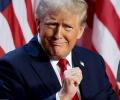
US President Donald Trump announced that a deal to end the war with Iran would be signed on Sunday, with the strategic Strait of Hormuz immediately becoming 'open to all'. This follows indications from Pakistan that negotiations were in their final stages, though Iran has yet to comment on the timeline.

Iran's World Cup football team has finally received visas to enter the United States, just days before their first match in Los Angeles.

US President Donald Trump and Pakistan Prime Minister Shehbaz Sharif have announced a landmark peace deal between the US and Iran, which includes the crucial reopening of the strategically important Strait of Hormuz and the immediate cessation of military operations in Lebanon.

US President Donald Trump revealed he was on the verge of ordering attacks on Iran but postponed the decision after receiving calls from Qatar and the UAE, citing progress in peace talks.
